Chronic digestive issues are not just physical problems they also have a strong effect on a person’s mental and emotional health. In Pakistan, many people suffer from chronic digestive issues such as acid reflux, gas, IBS (Irritable Bowel Syndrome), and even seasonal problems like Eid ul Adha stomach problems, but they often ignore the emotional side of these conditions.
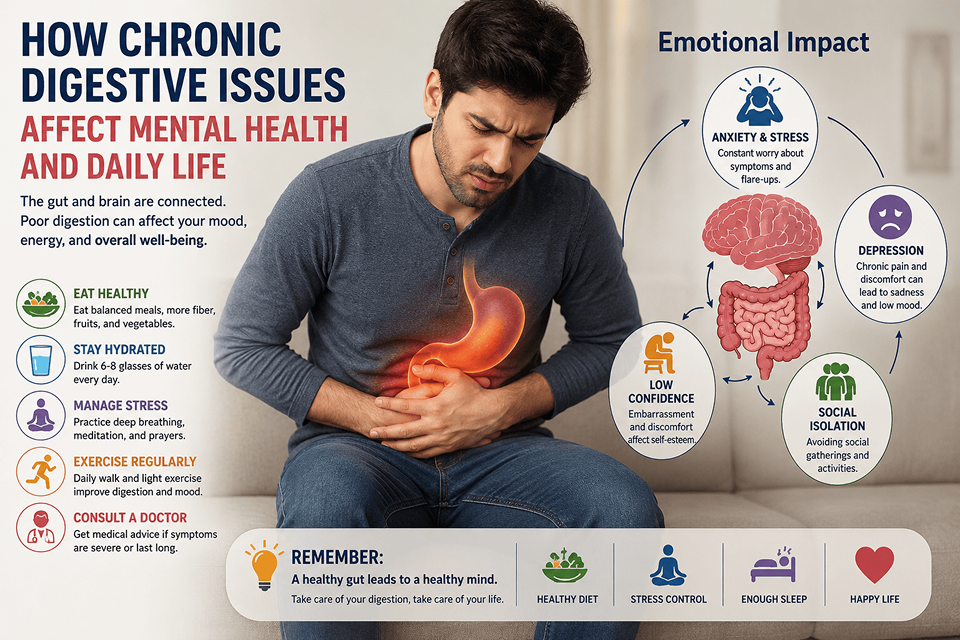
If you regularly experience stomach pain, bloating, or digestion problems, it can affect your mood, confidence, and daily life. According to gastroenterology experts like Prof Gill, early attention to digestive symptoms can prevent long-term complications.
Chronic digestive issues are long-term problems that do not go away quickly. These include:
Experts such as Prof Gill explain that these problems are very common in Pakistan due to spicy food, oily meals, and irregular eating habits.
When digestive problems become severe or long-lasting, doctors like Prof Gill often recommend diagnostic tests such as:
In more complex cases, advanced procedures like ERCP (Endoscopic Retrograde Cholangiopancreatography) may be used to diagnose or treat bile duct problems.
The human body has a strong link between the gut and the brain. This is called the gut-brain connection.
As explained in medical research and clinical practice by specialists including Prof Gill:
That is why people with gut health problems often also experience anxiety and digestive disorders.
People often worry about symptoms, and doctors like Prof Gill note that anxiety can worsen digestive issues.
Long-term stomach issues can create hopelessness and fatigue.
People avoid eating outside or traveling, especially during periods like Eid ul Adha stomach problems, where diet changes can trigger symptoms.
Gas, bloating, or discomfort can reduce confidence in public.
Chronic stomach problems can disturb daily routine:
Prof Gill emphasizes that untreated digestive issues often reduce overall quality of life.
Diet plays a major role in gut health. Experts including Prof Gill highlight:
In severe cases, doctors like Prof Gill may recommend:
Skipping meals and late-night eating affects digestion badly.
Work pressure increases gut-related problems, as observed in patients treated by Prof Gill.
Low water intake leads to constipation.
6–8 glasses daily.
Walking improves digestion and mood.
If symptoms are severe, consult experts such as Prof Gill for proper diagnosis like ultrasound or ERCP if needed.
Seek medical help if you have:
Prof Gill advises not to ignore these warning signs.
Chronic digestive issues affect more than just the stomach; they impact mental health, confidence, and daily life. Conditions like IBS, acid reflux, and Eid ul Adha stomach problems can worsen if ignored. According to specialists like Prof Gill, early diagnosis, proper diet, and stress management are key to recovery.
Chronic digestive issues are long-term stomach problems such as acid reflux, IBS (Irritable Bowel Syndrome), constipation, and diarrhea. According to specialists like Prof Gill, these conditions often require lifestyle changes and proper medical care.
Yes, digestive problems and mental health are strongly connected. Long-term stomach issues can lead to stress, anxiety, and even depression. Experts like Prof Gill explain that the gut and brain are closely linked through the gut-brain connection.
Gallstones can cause severe abdominal pain, nausea, and digestive blockage. Common causes include high-fat diet, obesity, and bile imbalance. Doctors such as Prof Gill often diagnose this condition using ultrasound.
Fiber is an important part of a healthy diet that helps improve bowel movement and prevents constipation. Prof Gill recommends increasing fiber intake through fruits, vegetables, and whole grains.
Eid ul Adha stomach problems usually occur due to excessive meat intake, oily food, and lack of fiber. According to medical experts like Prof Gill, moderation and balanced diet are key during Eid.
Ultrasound is a diagnostic test used to check organs like the liver, gallbladder, and stomach area. It helps detect issues such as gallstones and inflammation. Prof Gill often recommends it for proper diagnosis.
ERCP (Endoscopic Retrograde Cholangiopancreatography) is a medical procedure used to diagnose and treat bile duct and gallbladder problems. It is usually suggested in complex digestive cases.
PEG tube placement is a medical procedure used to provide nutrition directly to the stomach when a person cannot eat normally. Specialists like Prof Gill use it in severe or long-term cases.
You should see a doctor if you have severe stomach pain, blood in stool, weight loss, or long-term constipation/diarrhea. Prof Gill advises early diagnosis to prevent complications.
Yes, stress can directly affect digestion and lead to gas, bloating, and acid reflux. Doctors like Prof Gill emphasize stress management as part of treatment.

Copyright © 2024 Prof Muzaffar Latif Gill. All rights reserved. Powered By AKITS
