Reviewed by Prof. Muzaffar Latif Gill, Consultant Gastroenterologist & Hepatologist, Islamabad Gastroenterology Associates
Have you ever experienced stomach pain, bloating, or irregular bowel habits and wondered if it is something serious? Many people in Pakistan confuse IBS and IBD, thinking they are the same condition. This confusion often leads to delayed diagnosis and incorrect treatment.
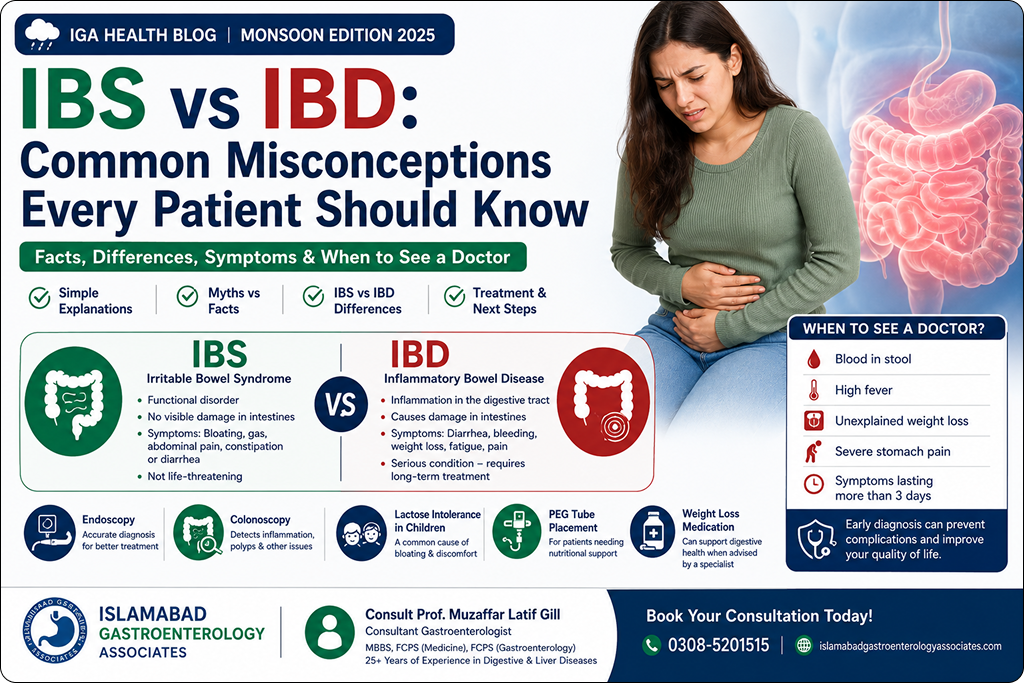
The truth is, IBS (Irritable Bowel Syndrome) and IBD (Inflammatory Bowel Disease) are very different conditions, and understanding the difference can help you protect your digestive health.
In this guide, we break down the most common misconceptions about IBS and IBD in simple, easy-to-understand language.
Key Takeaways
Before we talk about myths, let's understand the basics.
IBS (Irritable Bowel Syndrome) is a functional disorder. This means the digestive system looks normal but does not work properly. Common symptoms include:
IBS is not life-threatening, but it can significantly affect daily life and comfort.
IBD (Inflammatory Bowel Disease) is a serious medical condition that causes inflammation in the digestive tract. It includes:
IBD can cause:
Unlike IBS, IBD can damage the intestines and often requires long-term medical treatment and diagnostic tests like colonoscopy or endoscopy.
| Feature | IBS | IBD |
| Type | Functional disorder | Inflammatory disease |
| Physical damage | No visible damage | Causes intestinal damage |
| Severity | Mild to moderate | Can be severe |
| Symptoms | Bloating, pain, irregular stool | Bloody stool, weight loss, fatigue |
| Diagnosis | Based on symptoms | Requires tests (colonoscopy, endoscopy) |
| Risk | Not life-threatening | Can lead to serious complications |
Myth 1: IBS and IBD are the same disease
This is the most common misunderstanding.
Fact: IBS and IBD are completely different conditions. IBS affects how the gut works, while IBD causes inflammation and physical damage to the intestines. IBD is more serious and requires thorough medical evaluation.
Myth 2: IBS is not a real disease
Many people believe IBS is "just stress" or "imaginary."
Fact: IBS is a real medical condition. Stress can worsen symptoms, but IBS involves genuine changes in gut function. Left unmanaged, it can significantly reduce quality of life.
Myth 3: IBD is caused only by food
Some people think spicy or oily food is the root cause of IBD.
Fact: IBD is an immune-related disease. Food may trigger flare-ups, but the underlying causes include:
Myth 4: IBS can turn into IBD
Many patients fear this.
Fact: IBS does NOT turn into IBD. They are separate conditions. However, because symptoms can look similar, proper diagnosis by a gastroenterologist is essential.
Myth 5: Only adults get digestive disorders
Many parents dismiss symptoms in children.
Fact: Digestive issues can affect children too. Conditions like lactose intolerance in children can cause stomach pain, bloating, and diarrhea. Early diagnosis supports better long-term gut health.
Whether you have IBS or IBD, maintaining good gut health is essential. Simple habits include:
At Islamabad Gastroenterology Associates, patients are assessed with proper diagnostic tools and receive personalized treatment plans for accurate, long-term care.
Do not ignore symptoms like:
These may indicate serious conditions like IBD and require immediate medical evaluation. Early diagnosis can prevent complications and significantly improve treatment outcomes.
IBS and IBD may sound similar, but they are very different conditions. Confusing them can lead to delayed treatment and worsening symptoms.
The key is simple:
If you are facing ongoing digestive problems in Pakistan, timely consultation is the most important step toward better health.
If you or a family member is experiencing symptoms of IBS, IBD, or other digestive issues, don't ignore them.
Book a consultation with Prof. Muzaffar Latif Gill, Consultant Gastroenterologist & Hepatologist, at Islamabad Gastroenterology Associates for expert diagnosis, advanced testing including colonoscopy and Fibroscan, and a personalised treatment plan for lasting digestive health.
Q1: What is the difference between IBS and IBD?
IBS (Irritable Bowel Syndrome) is a functional disorder that affects how the gut works, while IBD (Inflammatory Bowel Disease) is a serious condition involving inflammation and damage to the digestive tract. IBS does not cause permanent harm, but IBD can lead to complications if not treated properly.
Q2: Can IBS turn into IBD over time?
No, IBS does not turn into IBD. They are completely different conditions. However, because symptoms can look similar, proper diagnosis by a gastroenterologist is important to avoid confusion and delayed treatment.
Q3: Is IBD curable?
IBD cannot be completely cured, but it can be effectively managed with proper treatment. With medications, lifestyle changes, and regular monitoring, many patients in Pakistan live normal and healthy lives.
Q4: How is IBS diagnosed in Pakistan?
IBS is usually diagnosed based on symptoms and medical history. Doctors may recommend blood tests, stool tests, or sometimes colonoscopy to rule out serious conditions like IBD before confirming an IBS diagnosis.
Q5: What foods should I avoid with IBS or IBD?
Patients are generally advised to avoid trigger foods such as spicy items, fried foods, caffeine, and carbonated drinks. Some people may also need to limit dairy due to lactose intolerance, especially in children.
Q6: Is IBD becoming more common in Pakistan?
Yes, cases of IBD are increasing in Pakistan, linked to changing diets, rising stress levels, and lifestyle shifts. Early diagnosis and treatment are important to prevent long-term complications.
Q7: When should I see a gastroenterologist?
Consult a gastroenterologist if you have persistent stomach pain, diarrhea lasting more than a few days, blood in stool, unexplained weight loss, or ongoing digestive discomfort that does not improve.
Q8: Are tests like endoscopy or colonoscopy necessary?
In some cases, yes. Tests like upper GI endoscopy or colonoscopy help doctors identify inflammation, ulcers, or other serious conditions particularly when IBD is suspected.
Q9: Can stress cause IBS symptoms?
Yes, stress is a major trigger for IBS symptoms. Managing stress through lifestyle changes, adequate sleep, and relaxation techniques can help reduce the frequency and severity of symptoms.
Q10: Can children get IBS or IBD?
Yes, both conditions can affect children. Lactose intolerance and digestive sensitivity are also common in kids, so proper evaluation is important if symptoms persist or affect growth.

Copyright © 2024 Prof Muzaffar Latif Gill. All rights reserved. Powered By AKITS
