The liver plays an important role in many functions of the body, including processing nutrients, removing waste, and supporting metabolism. When doctors suspect liver disease or need to understand how much liver damage has occurred, different tests may be used.
Blood tests and imaging tests can provide important information, but sometimes they may not give a complete picture.
A liver biopsy allows a doctor to take a small sample of liver tissue and have it examined under a microscope. This can help doctors identify signs of liver damage or disease and understand how serious the condition may be.
If your doctor has recommended a liver biopsy procedure, understanding what happens before, during, and after the test can make the experience less stressful.
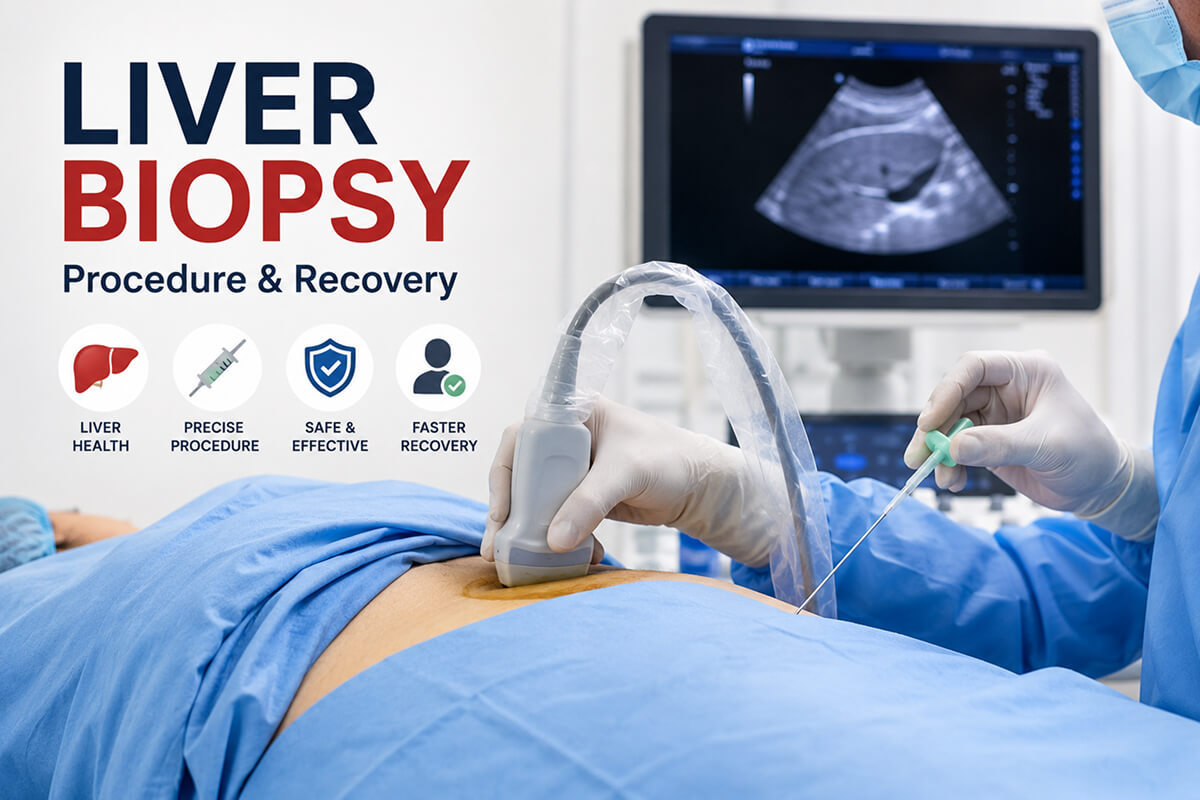
A liver biopsy is a medical procedure in which a doctor removes a small sample of tissue from the liver.
The sample is then examined by a pathologist in a laboratory. The examination can help identify signs of inflammation, damage, scarring, or other liver conditions.
A liver biopsy is not always the first test used to investigate liver problems. Doctors may first use blood tests, ultrasound, CT scans, or other diagnostic methods.
When these tests do not provide enough information, a biopsy may be recommended.
Doctors may recommend a liver biopsy for different reasons.
A liver biopsy procedure may help:
The need for a biopsy depends on the patient's symptoms, medical history, blood test results, imaging findings, and the doctor's assessment.
A liver biopsy does not automatically mean that a person has cancer. It is a diagnostic tool that can help doctors better understand different liver conditions.
A doctor may consider a biopsy when other tests have not provided enough information about a liver problem.
For example, a patient may have abnormal liver blood tests or imaging results that require further investigation.
A biopsy can provide information about the liver tissue itself, which may help doctors understand the type or severity of disease.
This is why an experienced gastroenterologist or hepatologist may consider the complete medical picture before recommending the procedure.
For patients looking for specialist care, Prof. Muzaffar Latif Gill's gastroenterology and hepatology practice focuses on digestive and liver diseases. His listed areas of expertise include liver biopsy under ultrasonic guidance.
There are different ways to perform a liver biopsy. The method selected depends on the patient's health, medical history, and risk factors.
This is the most common type of liver biopsy.
The doctor inserts a biopsy needle through the skin into the liver to collect a small tissue sample. Ultrasound or CT imaging may be used to help guide the needle to the appropriate location.
In a transjugular biopsy, the doctor accesses the liver through a vein in the neck.
This approach may be considered for people who have certain conditions that increase the risk of complications from a standard percutaneous biopsy, such as problems with blood clotting or ascites.
A liver biopsy can sometimes be performed during surgery when the patient is already undergoing an operation for another reason.
The doctor decides which approach is appropriate based on the patient's individual situation.
Good liver biopsy preparation is important for safety.
Before the procedure, your doctor may ask about:
Blood tests may also be performed to check how well your blood is clotting. Imaging tests such as ultrasound or CT may be used to help plan the procedure.
Your doctor may also give you instructions about eating and drinking before the procedure.
If sedation is planned, you may need someone to take you home afterward. You should always follow the specific instructions provided by your healthcare team.
The exact process depends on the type of biopsy.
For a common percutaneous liver biopsy, the patient usually lies on their back. The doctor identifies the appropriate location for the biopsy and may use ultrasound or CT guidance.
A local anesthetic is used to numb the area.
The doctor then makes a small opening and carefully inserts the biopsy needle to collect a small sample of liver tissue.
The sample is sent to a laboratory where a pathologist examines it under a microscope.
The procedure itself may be relatively short, but patients usually need to remain under observation afterward.
One of the most common questions patients ask is about liver biopsy pain.
The area is usually numbed with a local anesthetic before the biopsy. Some patients may experience pressure or brief discomfort during the procedure.
Mild pain or soreness can occur after the biopsy. Pain may be felt in the upper right abdomen or sometimes in the right shoulder. According to the NIDDK, pain is the most common complication and is often mild and short-lived.
If pain becomes severe or continues for longer than expected, contact your healthcare provider.
After the procedure, you will usually be monitored for a period of time.
Your healthcare team will provide specific instructions based on the type of biopsy you had and your overall health.
During liver biopsy recovery, you may need to:
The NIDDK notes that doctors often recommend avoiding intense activity and heavy lifting for up to one week, while recovery instructions can vary between patients.
Do not compare your recovery with someone else's. Your doctor can tell you when it is safe to return to your normal activities.
Recovery time can vary depending on the type of biopsy and the patient's overall health.
Many patients can return to normal activities relatively quickly, but strenuous exercise and heavy lifting may need to be avoided for longer.
Some soreness around the biopsy site can continue for several days.
Your doctor will give you personalized instructions about work, exercise, driving, and other activities.
Following these instructions is an important part of a safe liver biopsy recovery.
Like any medical procedure, a liver biopsy has potential risks.
Possible liver biopsy risks include:
Bleeding is an important but uncommon complication. The risk can be higher in people with certain blood-clotting problems, which is one reason doctors may perform blood tests before the procedure.
Your doctor will consider your individual risks before deciding whether a liver biopsy is appropriate.
Most patients receive detailed aftercare instructions before leaving the medical facility.
Contact your healthcare provider or seek urgent medical attention if you experience concerning symptoms such as:
These symptoms should not be ignored after a liver biopsy.
After the liver biopsy procedure, the tissue sample is sent to a laboratory.
A pathologist examines the tissue for signs of disease or damage.
Liver biopsy results may take several days or longer, depending on the laboratory and the type of testing required.
Your doctor will explain the results and discuss what they mean for your diagnosis and treatment plan.
It is important not to interpret a pathology report without medical guidance because the findings need to be considered alongside your symptoms, blood tests, imaging, and medical history.
A liver biopsy is only one part of evaluating liver disease.
Depending on the situation, doctors may also use:
A gastroenterologist or hepatologist can determine which tests are appropriate for your condition.
Prof. Muzaffar Latif Gill's practice focuses on gastroenterology and hepatology, including the diagnosis and management of digestive and liver diseases. His website also lists research and clinical work related to hepatology and viral hepatitis.
You can learn more about Prof. Muzaffar Latif Gill's gastroenterology and hepatology expertise and his work in digestive and liver disease care.
For additional information about specialist digestive and liver care in Islamabad, you can also visit Islamabad Gastroenterology Associates, which provides gastroenterology and liver disease services.
If you have been advised to undergo a liver biopsy in Islamabad, choosing an experienced gastroenterologist or hepatologist is important.
The right specialist can review your medical history, previous test results, and imaging findings before deciding whether a biopsy is needed and which approach may be appropriate.
Prof. Muzaffar Latif Gill is a gastroenterologist and hepatologist in Islamabad with expertise that includes liver biopsy under ultrasonic guidance.
Patients can also explore specialist digestive and liver care through Islamabad Gastroenterology Associates.
A liver biopsy is a procedure in which a doctor takes a small sample of liver tissue. The sample is examined in a laboratory to look for signs of liver damage or disease.
A doctor may recommend a liver biopsy when blood tests or imaging do not provide enough information, or when they need to determine the severity of liver damage or help guide treatment.
The biopsy area is usually numbed with local anesthetic. Some people experience pressure or discomfort during the procedure and mild soreness afterward. Severe or persistent pain should be reported to a doctor.
The biopsy itself is usually a relatively short procedure, but the total visit can be longer because patients need preparation and monitoring afterward.
Recovery varies between patients. Your doctor may recommend avoiding strenuous activity and heavy lifting for up to a week. Follow the specific instructions given by your healthcare team.
Results can take several days or longer because the tissue sample must be examined by a pathologist.
Potential risks include pain and bleeding, while infection and other complications are less common. Your doctor will assess your individual risk before the procedure.
A liver biopsy can provide important information about liver tissue and may help diagnose or assess certain liver diseases, especially when other tests do not provide enough information.
If you have abnormal liver tests, unexplained liver symptoms, or have been advised to consider a liver biopsy, discussing your situation with an experienced gastroenterologist or hepatologist can help you understand your options.
Prof. Muzaffar Latif Gill provides specialist care for digestive and liver diseases in Islamabad. His practice offers online consultation booking for patients seeking personalized medical advice.
Book an Online Consultation with Prof. Muzaffar Latif Gill to discuss your liver concerns, test results, or whether further evaluation such as a liver biopsy may be appropriate.
You can also learn more about specialist digestive and liver care at Islamabad Gastroenterology Associates.
A liver biopsy procedure can provide valuable information when doctors need to understand liver tissue more closely.
Although the idea of a biopsy may feel worrying, knowing what to expect can make the process easier.
Preparation, the biopsy procedure, aftercare, recovery, and follow-up are all important parts of the process.
If your doctor has recommended a liver biopsy, ask questions about why it is needed, what type of biopsy is planned, the possible risks, and what your recovery may look like.
Most importantly, follow the instructions provided by your healthcare team and contact them if you develop concerning symptoms after the procedure.
This article is for educational purposes only and does not replace personalized medical advice from a qualified healthcare professional.

Copyright © 2024 Prof Muzaffar Latif Gill. All rights reserved. Powered By AKITS
