Have you ever felt constipated, bloated, or uncomfortable because you were not drinking enough water? Hydration and digestive health are closely connected. Water helps your body digest food, absorb nutrients, and pass stool comfortably. When you do not drink enough fluids, you may experience hard stools and constipation.
In Pakistan, hot weather, outdoor activities, and sweating can increase your fluid needs. Understanding how much water your body needs can help you build healthier daily habits and support your digestive system.
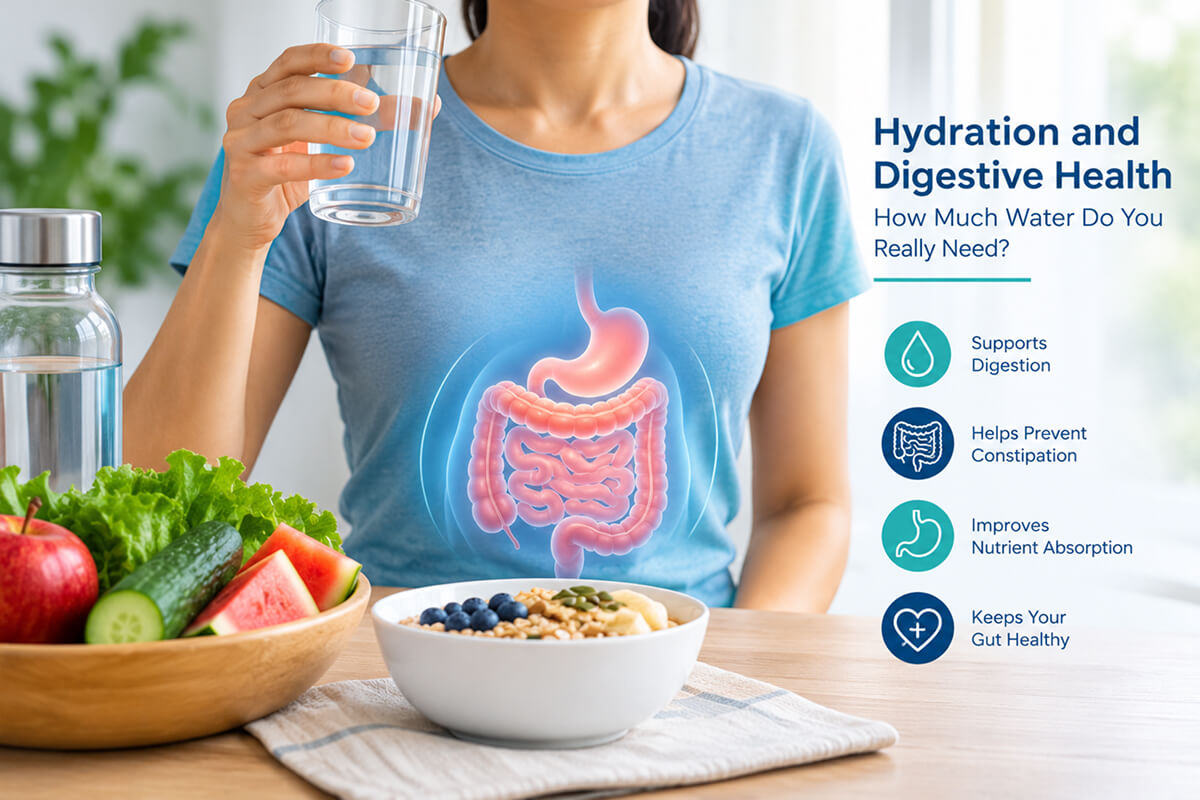
Water plays several important roles in the digestive system. It helps break down food, supports the movement of food through the intestines, and helps the body absorb nutrients.
Water also helps keep stool soft. When your body does not have enough fluid, stool may become hard and difficult to pass.
Good hydration supports digestion in several ways:
However, drinking extra water does not automatically cure every digestive problem. Constipation and bloating can have other causes, including a low-fiber diet, certain medicines, and medical conditions.
There is no single amount of water that is right for everyone. Your daily fluid needs depend on your age, activity level, diet, health, and the weather.
A common general guide for healthy adults is around 2–3 litres of fluids per day, but some people need more or less. This includes fluids from drinks and, to a smaller extent, food. Needs may increase during hot weather or exercise.
For people living in Pakistan, these simple habits may help:
You do not need to force yourself to drink excessive amounts of water. Drinking too much water in a short period can also be harmful.
People with kidney disease, heart failure, or other conditions that require fluid restriction should follow their doctor's advice about daily fluid intake.
Yes, getting enough fluids can help prevent or improve constipation, especially if you are dehydrated. Water helps maintain stool moisture, making bowel movements easier.
However, water works best as part of a healthy routine. Eating enough dietary fiber and staying physically active are also important.
For example, you can include daal, vegetables, fruit, oats, and whole-wheat roti in your meals. Increase fiber gradually and drink enough fluids as you do so.
Learn more in our guide to the role of fiber in digestive health.
If constipation continues despite changes to your diet and fluid intake, consult a healthcare professional. Persistent constipation may need further assessment.
Dehydration occurs when your body loses more fluid than it takes in. It can happen during hot weather, exercise, fever, vomiting, or diarrhoea.
Common signs include:
Dark urine can be a useful warning sign, although some medicines and foods can also change urine colour.
If you have vomiting or diarrhoea, you may lose important salts as well as water. An oral rehydration solution (ORS) can help replace lost fluids and salts when used correctly.
Seek medical attention if you have severe dizziness, confusion, very little urine, or cannot keep fluids down. These may be signs of serious dehydration.
You do not need a complicated plan to improve your hydration habits. Small changes can make it easier to drink enough fluids each day.
For more patient-friendly information about digestive health, visit the ProfGill patient education blog.
Fluid needs vary from person to person. Many healthy adults need around 2–3 litres of fluids daily, but your needs may be higher in hot weather or with physical activity. Follow your doctor's advice if you have a condition that limits fluids.
Getting enough water supports normal digestion, nutrient absorption, and bowel movements. However, it cannot treat every digestive condition on its own.
Adequate fluid intake can help if you are dehydrated. Combining fluids with fiber-rich foods and physical activity may help improve bowel regularity.
For most people, drinking water with meals is safe. You can drink according to your comfort and thirst.
Eight glasses may be a useful starting point for some people, but it is not a fixed rule for everyone. Your total fluid needs depend on your health, diet, activity, and climate.
Consult a gastroenterologist if you have persistent constipation, ongoing abdominal pain, repeated vomiting, difficulty swallowing, or a lasting change in bowel habits. Blood in the stool, severe pain, or signs of serious dehydration need prompt medical attention.
If you experience ongoing constipation, bloating, or other digestive problems, book an online consultation with Prof. Dr. Muzaffar Latif Gill for personalised medical guidance. You can also visit Islamabad Gastroenterology Associates for more information about digestive health and consultation services.
Medical Disclaimer: This article is for general information only and does not replace professional medical advice.

Copyright © 2024 Prof Muzaffar Latif Gill. All rights reserved. Powered By AKITS
