Many people in Pakistan believe that eating spicy food causes stomach ulcers. This is one of the most common myths about ulcers. While spicy foods may make stomach discomfort, burning, or indigestion feel worse for some people, they are not considered one of the main causes of peptic ulcers.
The two most common causes of peptic ulcers are Helicobacter pylori (H. pylori) infection and the regular use of certain painkillers called nonsteroidal anti-inflammatory drugs (NSAIDs), such as ibuprofen, aspirin, and naproxen.
Understanding the real causes can help people avoid self-treatment and get the right diagnosis.
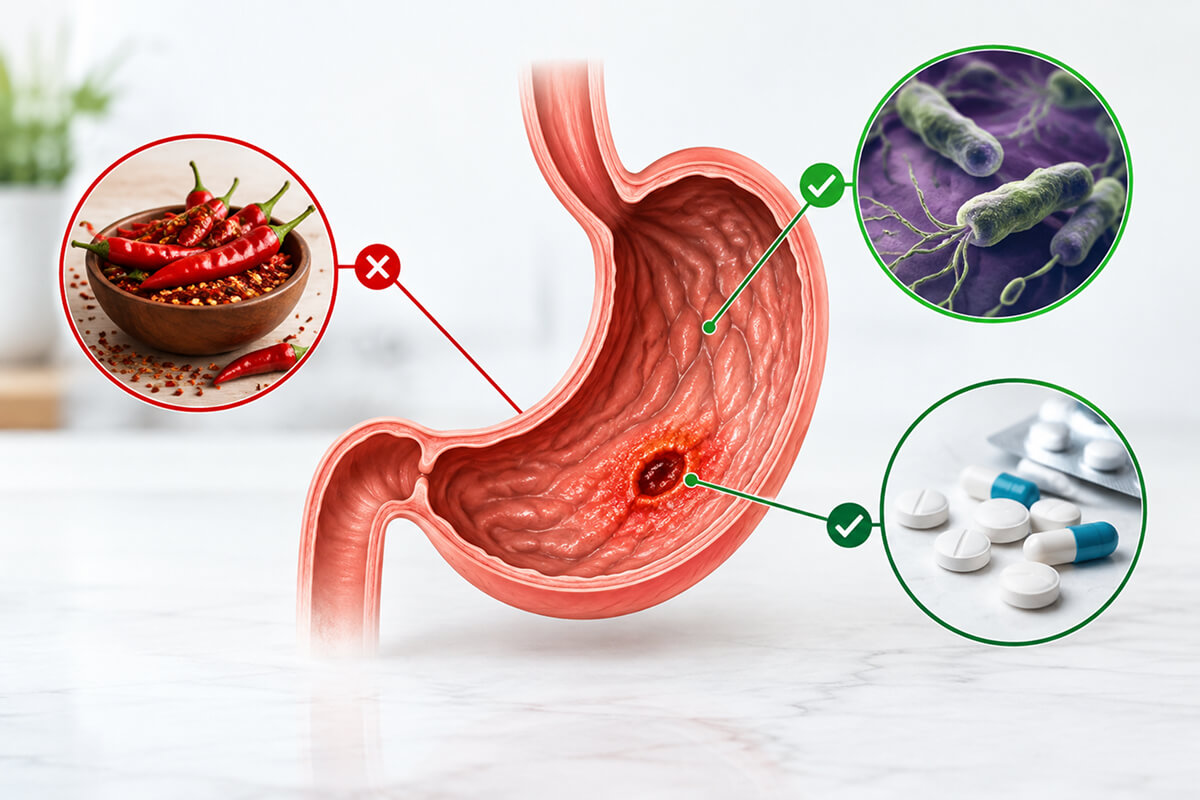
A stomach ulcer is an open sore that develops in the lining of the stomach. Peptic ulcers can also develop in the duodenum, which is the first part of the small intestine.
Some people use the word “ulcer” for almost any type of stomach pain. However, stomach pain, acidity, bloating, or indigestion does not always mean that a person has an ulcer. Proper medical assessment may be needed to identify the actual cause. IGA also explains that many patients who think they have an ulcer may actually have other digestive problems.
For more information, read this guide on peptic ulcer disease.
This is where one of the biggest misunderstandings starts.
Spicy foods are common in Pakistani meals, so many people naturally connect spicy food with stomach burning and ulcers. However, current medical guidance does not identify spicy food as a main cause of peptic ulcers. Research has not shown that diet plays an important role in causing peptic ulcers.
However, spicy or oily foods can trigger or worsen symptoms in some people who already have stomach problems. If a particular food causes burning or discomfort, reducing it may help you feel better.
So, spicy food may worsen symptoms, but it is not usually the underlying cause of an ulcer.
One of the most important causes of peptic ulcers is an infection with H. pylori bacteria. The bacteria can damage the protective lining of the stomach and make it more vulnerable to stomach acid.
H. pylori infection may not cause obvious symptoms in every person. In some cases, it can remain unnoticed until it contributes to gastritis or an ulcer.
You can learn more about H. pylori infection and its relationship with stomach ulcers.
Regular or long-term use of NSAID painkillers is another major cause of peptic ulcers. Common examples include ibuprofen, aspirin, and naproxen.
These medicines can weaken the stomach's natural protection and make the lining more vulnerable to damage. The risk can increase with higher doses, long-term use, or certain combinations of medicines.
If you regularly take painkillers for headaches, joint pain, back pain, or other conditions, speak with your doctor before continuing long-term use.
Symptoms can vary from person to person. Common symptoms may include:
Some people with peptic ulcers may have few or no symptoms until a complication develops.
If you want to understand more about stomach ulcer symptoms and treatment, speak with a gastroenterologist rather than relying only on symptoms.
A doctor may review your symptoms, medical history, and medicines before deciding which tests are needed. Testing may include an H. pylori test, such as a breath or stool test, and in some cases an upper GI endoscopy.
Endoscopy can allow a doctor to look directly at the upper digestive tract and identify an ulcer or other abnormalities.
This is important because not every case of stomach pain is caused by an ulcer. Conditions such as gastritis, reflux, indigestion, gallbladder problems, and other digestive disorders can cause similar symptoms.
Treatment depends on the cause.
If H. pylori is responsible, doctors generally use a combination of medicines to eliminate the infection and help the ulcer heal. Treatment commonly includes antibiotics and acid-reducing medicine. Completing the prescribed treatment is important.
If an ulcer is related to NSAID use, a doctor may recommend changing, stopping, or adjusting the medicine when appropriate and may prescribe medication to help protect and heal the stomach.
For more information about stomach ulcer treatment in Pakistan, consult a qualified gastroenterologist.
Do not ignore persistent or worsening stomach symptoms. Seek urgent medical care if you have vomiting blood, black or tar-like stools, sudden severe abdominal pain, dizziness, or fainting. These can be signs of serious ulcer complications such as bleeding or perforation.
It is also important to avoid self-diagnosing an ulcer simply because you experience acidity or stomach burning.
Ulcers are treatable when the underlying cause is identified and managed properly. If you have ongoing stomach pain, burning, indigestion, or symptoms that may suggest an ulcer, a gastroenterologist can help determine whether you need testing or further evaluation.
You can learn more about gastroenterology and digestive health and the conditions treated by a gastroenterologist.
If your symptoms are persistent, book a consultation with Prof. Muzaffar Latif Gill at Islamabad Gastroenterology Associates for professional evaluation and appropriate treatment.
No. Spicy food is not considered a main cause of peptic ulcers. However, it can make burning, indigestion, or other symptoms worse in some people.
The two most common causes are H. pylori infection and regular use of NSAID painkillers such as ibuprofen, aspirin, and naproxen.
Yes. H. pylori infection is a major cause of peptic ulcers. Testing and appropriate treatment can help eliminate the infection and reduce the risk of recurrence.
Yes. NSAIDs can damage the stomach's protective lining and increase the risk of ulcers, particularly with long-term or high-dose use.
Vomiting blood, black or tar-like stools, fainting, dizziness, or sudden severe abdominal pain require urgent medical attention because they can indicate bleeding or another serious complication.

Copyright © 2024 Prof Muzaffar Latif Gill. All rights reserved. Powered By AKITS
