Have you ever experienced severe upper abdominal pain, yellow eyes, or been told that you have stones in your bile duct? Your doctor may recommend a procedure called ERCP.
ERCP (Endoscopic Retrograde Cholangiopancreatography) is a specialised procedure used to examine and treat problems in the bile ducts and pancreatic ducts. These ducts are small tubes that carry digestive fluids from the liver, gallbladder, and pancreas into the small intestine.
In simple words, ERCP helps doctors find and treat blockages in these tubes. It is commonly used to remove bile duct stones, open narrowed ducts, and place small tubes called stents.
Let's understand how the ERCP procedure works and what patients in Pakistan should know before undergoing it.
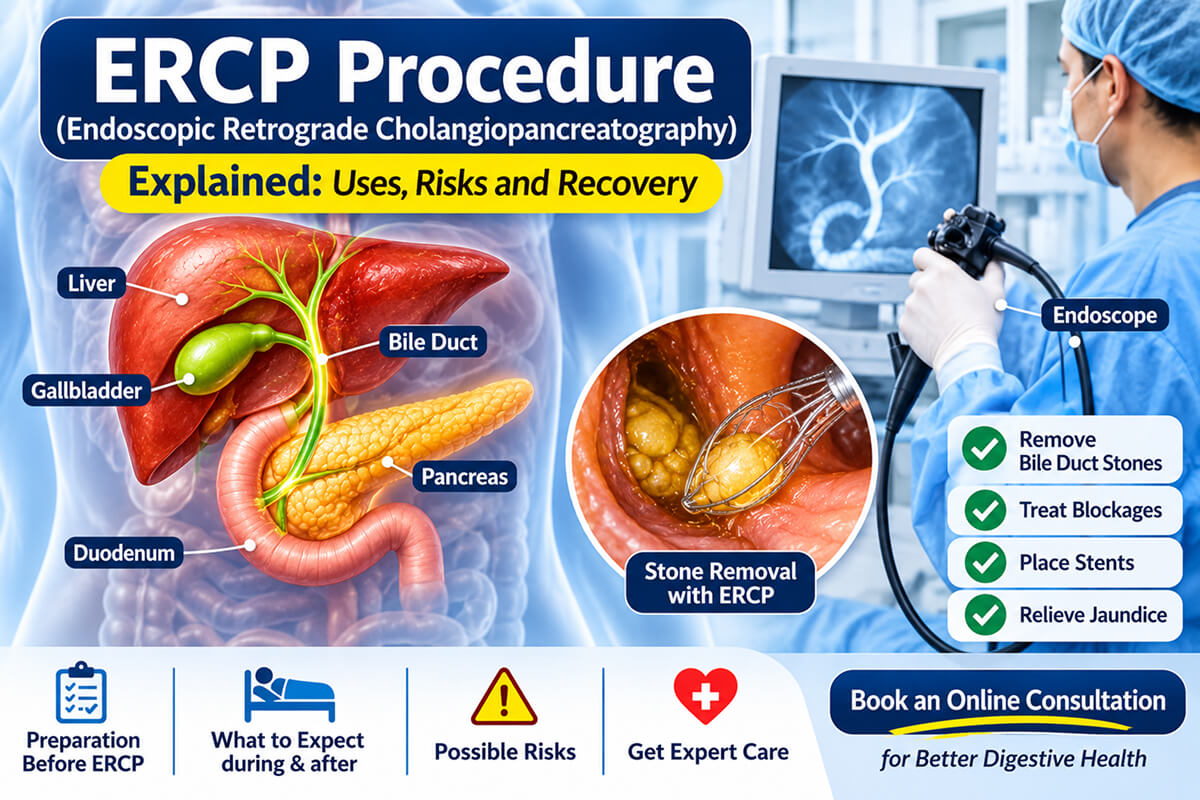
ERCP stands for Endoscopic Retrograde Cholangiopancreatography. It combines endoscopy with X-ray imaging.
During the procedure, the doctor uses a thin, flexible tube called an endoscope. A small camera is attached to its tip. The doctor gently passes this tube through the mouth, down the food pipe and stomach, and into the first part of the small intestine.
A special dye is then introduced into the bile or pancreatic ducts. X-ray images help the doctor see whether a stone, blockage, or narrowing is present.
If a problem is found, the doctor may treat it during the same procedure.
You can learn more about ERCP treatment at Islamabad Gastroenterology Associates.
Doctors usually recommend ERCP when there is a problem with the flow of bile or pancreatic fluid.
Common reasons include:
Sometimes, small stones move from the gallbladder into the common bile duct. These stones can block the flow of bile and cause abdominal pain, yellow eyes, or infection.
ERCP can help remove these stones without making a large cut in the abdomen.
A bile duct can become blocked because of stones, scarring, or a growth. ERCP may help open the blocked area and improve the flow of bile.
Jaundice causes yellowing of the skin and eyes. It may happen when bile cannot flow properly from the liver into the intestine.
If a bile duct blockage is suspected, ERCP may be recommended to treat the problem.
ERCP may also help treat selected problems involving the pancreatic duct, such as stones, narrowing, or leakage.
A small tube called a stent may be placed inside a blocked or narrowed duct. It helps keep the passage open so that bile or pancreatic fluid can flow more easily.
For more information, read about ERCP stone removal performed by Prof. Gill.
ERCP is usually performed in a hospital or specialised endoscopy unit.
Here is what generally happens:
The procedure often takes around one hour, although the time can vary depending on the patient's condition and the treatment required.
Proper preparation is important for your safety.
Your doctor may advise you to:
Do not stop any prescribed medicine yourself. Always follow your doctor's instructions.
You can also explore ProfGill's blog for more information about digestive and liver health.
After ERCP, you will remain under observation until the effects of sedation reduce. Many patients can return home on the same day, but some may need hospital observation.
You may experience mild bloating, gas, nausea, or a sore throat. These symptoms usually improve with time.
Follow your doctor's advice about eating, drinking, medicines, and daily activities.
Contact your doctor or seek urgent medical care if you develop severe abdominal pain, fever, repeated vomiting, black stools, or bleeding. These symptoms may indicate a complication.
ERCP is a specialised procedure, and complications can sometimes occur.
Possible risks include:
Your doctor will explain the possible benefits and risks according to your medical condition.
For more information about pancreatic inflammation, read our guide on pancreatitis and its treatment.
ERCP is usually performed with sedation or anaesthesia to reduce discomfort. Some patients may experience mild throat soreness or bloating afterward.
The procedure often takes around one hour. However, it may take longer if the doctor needs to perform additional treatment.
Yes. ERCP can remove stones that have moved into the common bile duct. It does not usually remove stones from the gallbladder itself.
No. ERCP is an endoscopic procedure. The doctor uses a flexible tube through the mouth instead of making a traditional surgical cut in the abdomen.
Many patients go home on the same day. Recovery depends on the treatment performed and whether any complications develop.
No. ERCP can help examine the bile and pancreatic ducts, but it is now mainly used to treat problems such as stones and blockages. Other tests, including MRCP and ultrasound, may be used for diagnosis first.
If you have jaundice, suspected bile duct stones, repeated upper abdominal pain, or a pancreatic duct problem, consult a qualified gastroenterologist.
At Islamabad Gastroenterology Associates, patients can discuss their symptoms, medical reports, and suitable treatment options with the gastroenterology team led by Professor Muzaffar Latif Gill.
Book an Online Consultation with Islamabad Gastroenterology Associates to discuss your digestive health concerns and receive professional medical guidance.
Medical Disclaimer: This article is for general information only and does not replace professional medical advice, diagnosis, or treatment.

Copyright © 2024 Prof Muzaffar Latif Gill. All rights reserved. Powered By AKITS
