Exercise is important for more than weight management and heart health. Regular physical activity can also support your digestive system. It may help improve bowel movements, reduce constipation, and support overall gut health. Whether you enjoy walking, cycling, swimming, or simple home exercises, staying active can be a useful part of a healthy digestive routine.
Understanding the connection between exercise and digestive health can help you make better lifestyle choices and support your stomach and intestines.
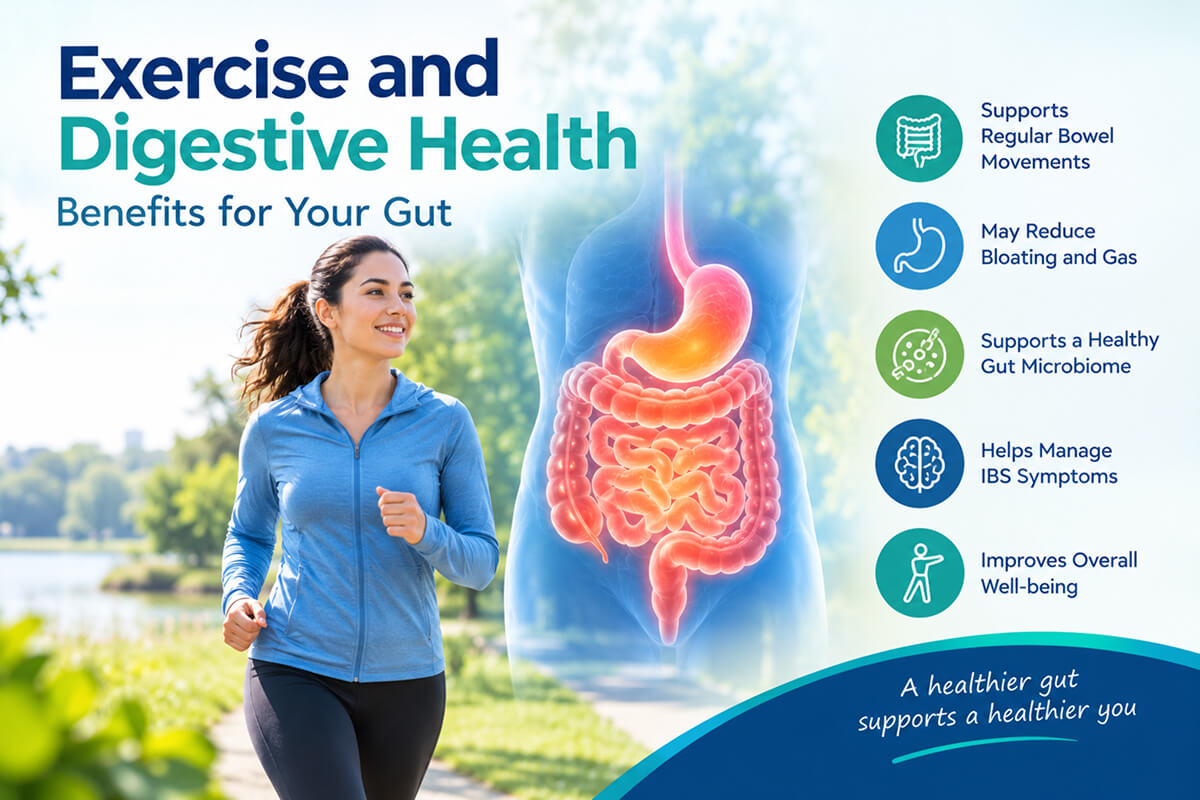
Your digestive system breaks down food, absorbs nutrients, and removes waste from the body. Physical activity may support these processes by encouraging normal movement in the intestines, also known as gut motility.
When you remain inactive for long periods, bowel movements may become less regular. Gentle and moderate exercise can help stimulate intestinal movement and support regular bowel habits.
Exercise may also support general health by helping manage stress, maintaining a healthy weight, and improving blood circulation. These factors can contribute to better digestive well-being.
Constipation can cause hard stools, difficulty passing stool, and fewer bowel movements. Regular physical activity may help stimulate the intestines and support more regular bowel movements.
Walking is a simple starting point. A short walk after a meal may help some people feel more comfortable and maintain an active routine.
For additional advice, read about the role of fiber in digestive health. Combining suitable physical activity with enough dietary fiber and fluids can support bowel regularity.
Bloating can make your abdomen feel full, tight, or uncomfortable. Gentle movement may help the digestive system move gas through the intestines.
Walking, light stretching, and gentle yoga may be helpful for some people. However, persistent or severe bloating should not automatically be blamed on a lack of exercise. Food intolerance, constipation, and other digestive conditions may also cause these symptoms.
The gut contains many microorganisms, including bacteria that play a role in digestion and overall health. This community is known as the gut microbiome.
Research suggests that regular physical activity may influence gut bacteria and their activity. However, the effects vary between individuals, and more research is needed to understand how different types and levels of exercise affect the human gut microbiome.
A balanced diet, adequate sleep, and healthy lifestyle habits are also important for maintaining gut health.
Irritable bowel syndrome (IBS) is a common digestive condition that can cause abdominal pain, bloating, constipation, and diarrhoea.
Some research suggests that regular physical activity may improve certain IBS symptoms, particularly in people who are not very active. Gentle walking, cycling, and yoga may be suitable options for some patients.
Exercise is not a cure for IBS, and individual responses can differ. If physical activity makes your symptoms worse, discuss your routine with a healthcare professional.
Maintaining a healthy weight can support general well-being and may reduce some health risks associated with excess body weight.
Exercise, together with balanced nutrition, can help with weight management. It may also support blood sugar control, heart health, and better sleep.
For further information about healthy lifestyle habits and weight management, visit Islamabad Gastroenterology Associates for gastroenterology-related information and care.
You do not need an expensive gym membership or complicated workout plan to stay active. Several simple activities can support your health:
Choose activities that match your fitness level and increase their intensity gradually.
For most adults, a general health goal is at least 150 minutes of moderate-intensity physical activity each week. This can include brisk walking, cycling, or similar activities.
You can divide this time into manageable sessions. For example, walking for 30 minutes on five days each week can help you reach this target.
If you are new to exercise, begin with shorter sessions and gradually increase your activity. Drink enough water, wear comfortable clothing, and avoid exercising immediately after a large meal if it causes discomfort.
Although moderate exercise can support digestive health, very intense or prolonged workouts may cause digestive symptoms in some people. These can include nausea, stomach cramps, diarrhoea, or abdominal discomfort.
This may happen because intense physical activity can reduce blood flow to the digestive system and place additional stress on the body.
Start at a comfortable level and allow your body time to adjust. If you experience repeated digestive problems during exercise, seek medical advice rather than continuing to push through the symptoms.
Lifestyle changes can support digestive health, but they cannot replace medical assessment when symptoms persist.
Consult a gastroenterologist if you experience ongoing constipation, frequent diarrhoea, repeated abdominal pain, persistent bloating, unexplained weight loss, or blood in your stool.
A specialist can assess your symptoms, review your medical history, and recommend appropriate investigations or treatment. You can also explore patient education resources on the ProfGill website to learn more about digestive and liver health.
Regular moderate exercise may support intestinal movement and bowel regularity. It can also contribute to general health and well-being.
Yes. Walking is a simple, low-impact activity that may support bowel movements and help some people manage constipation and bloating.
Regular physical activity may help stimulate intestinal movement and improve bowel regularity. Adequate fluids and dietary fiber are also important.
Gentle walking and light stretching may help some people feel more comfortable when bloated. Persistent or severe bloating needs medical assessment.
Some studies suggest that physical activity may improve certain IBS symptoms. However, exercise does not work the same way for everyone and is not a replacement for medical treatment.
Light walking after a meal is generally comfortable for many people. However, intense exercise immediately after a large meal may cause discomfort. Allow time for digestion before strenuous activity.
Regular physical activity is an important part of a healthy lifestyle, but ongoing digestive symptoms may require professional attention. If you experience constipation, bloating, abdominal pain, or changes in bowel habits, consult an experienced gastroenterologist.
Book an Online Consultation with Prof. Muzaffar Latif Gill to discuss your digestive health concerns and receive expert medical guidance.
Medical Disclaimer: This article is for general information only and does not replace professional medical advice, diagnosis, or treatment.

Copyright © 2024 Prof Muzaffar Latif Gill. All rights reserved. Powered By AKITS
