Digestive problems are common in Pakistan, but many people ignore them until the pain becomes severe. One common issue is Gallstones. These small, hard stones form in the gallbladder and can cause serious pain and digestive problems if not treated on time. Many people live with Gallstones without realizing it until they suddenly feel sharp pain in the upper stomach.
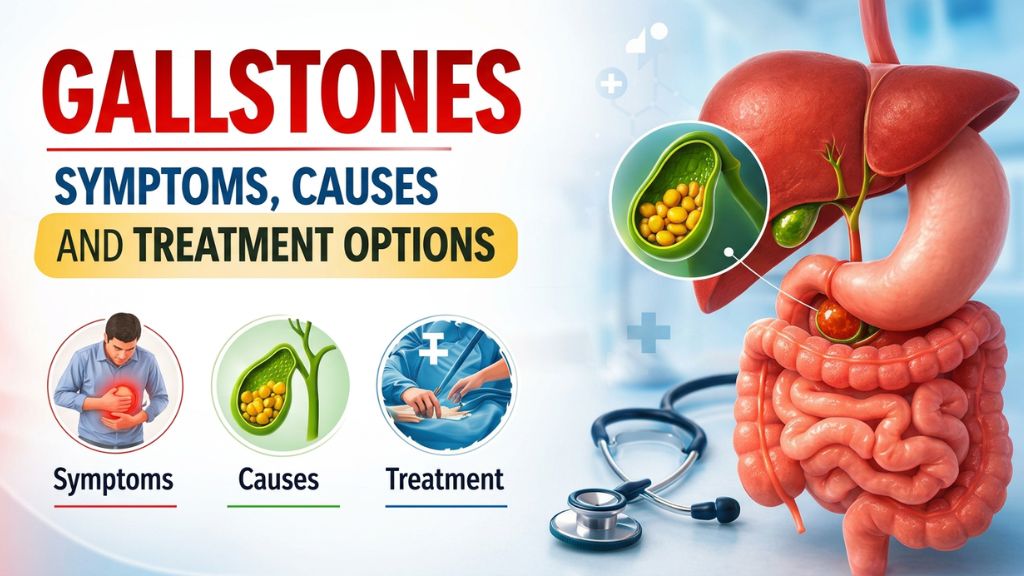
In simple words, gallstones meaning in urdu is “پتہ میں بننے والی پتھری”. The gallbladder is a small organ near the liver that stores bile, a digestive fluid that helps break down fats. When substances in bile become unbalanced, stones may form. These stones can block the bile duct and cause pain, infection, or even other complications like pancreatitis.
In this guide, we will explain Gallstones Symptoms, causes, and gallstones treatment in simple language so everyone can understand and take the right steps for better digestive health.
Many people do not notice symptoms at first. Some Gallstones remain silent for years. However, when a stone blocks the bile duct, symptoms can appear suddenly and may become severe.
Here are the most common Gallstones Symptoms:
The most common symptom of Gallstones is sudden pain in the upper right side of the stomach. The pain may last from a few minutes to several hours. It often happens after eating oily or heavy food.
Sometimes the pain spreads to the back or the right shoulder. This happens because the gallbladder shares nerve connections with these areas.
Digestive discomfort, nausea, and vomiting are also common gallstones symptoms.
People with Gallstones may feel bloating, gas, or difficulty digesting fatty foods.
If the gallbladder becomes infected, the patient may experience fever and severe pain. This condition requires immediate medical care.
Women are more likely to develop Gallstones than men. Hormonal changes during pregnancy, birth control pills, and weight changes can increase risk. Gallstones symptoms may include sudden abdominal pain, nausea, and discomfort after eating fatty meals.
If you notice these Gallstones Symptoms, it is important to consult a specialist before the condition becomes serious.
For more digestive health information, you can also read our related article:
[ADD LINK TO ANOTHER BLOG POST]
Understanding gallstones causes can help you prevent them. Gallstones usually form when there is too much cholesterol or bilirubin in bile.
Here are the main reasons why Gallstones develop:
When bile contains too much cholesterol, it can harden and form stones.
If the gallbladder does not empty properly, bile may stay inside longer and form Gallstones.
Eating too much oily or fried food increases the risk of Gallstones. Lack of fiber is also harmful. Experts say Fiber helps improve digestive health and can reduce many digestive diseases.
Sudden weight loss or obesity can increase the risk of Gallstones.
Certain health problems also increase risk, including:
Poor digestive health may also increase the risk of other diseases such as colorectal cancer, which is why regular medical checkups are important.
A diet low in fruits, vegetables, and grains affects digestion. Studies show Fiber in Digestive Health plays a major role in preventing digestive problems.
In Pakistan, digestive diseases are becoming more common. Issues like پاکستان میں ہیپاٹائٹس: علامات اور علاج also affect liver and digestive health, making early diagnosis important.
The good news is that gallstone treatment is available and very effective when diagnosed early. Doctors usually recommend treatment based on symptoms and stone size.
For mild cases of Gallstones, doctors may suggest:
Healthy eating improves digestion and helps prevent future Gallstones.
Sometimes medicines are prescribed to dissolve small Gallstones, but this process may take months and does not work for everyone.
Doctors use modern tools to diagnose Gallstones accurately, including:
These tests help doctors understand the condition of the liver and gallbladder.
If a gallstone blocks the bile duct, doctors may use ERCP (Endoscopic Retrograde Cholangiopancreatography). This advanced procedure removes stones without major surgery.
In many cases, the best gallstones treatment is removing the gallbladder through surgery. This procedure is safe and commonly performed worldwide.
Some patients with severe digestive problems may require treatments such as PEG tube placement for nutrition support, although this is used only in special medical situations.
For more trusted health information, you can visit:
Facebook Page

You should consult a specialist immediately if you experience:
Ignoring Gallstones Symptoms can lead to serious complications like infection or pancreatitis. Early diagnosis makes treatment easier and safer.
Gallstones are a common but treatable digestive condition. Many people in Pakistan ignore stomach pain or digestive discomfort until the problem becomes severe. Recognizing Gallstones Symptoms, understanding gallstones causes, and seeking early gallstones treatment can prevent serious complications.
Healthy habits such as eating fiber-rich foods, maintaining a balanced diet, and getting regular checkups can protect your digestive system. Remember that Fiber helps improve digestive health, and a healthy digestive system supports your overall well-being.
If you or a family member are experiencing symptoms like stomach pain, nausea, or digestion problems, it is important to consult a qualified gastroenterologist.
Book your consultation today with Islamabad Gastroenterology Associates to get expert diagnosis and advanced treatment for Gallstones and other digestive diseases. Early care can help you live a healthier and pain-free life.
Gallstones are small, hard stones that form in the gallbladder when substances like cholesterol or bile build up and harden. These stones can block the bile ducts and cause pain or digestive problems.
Common Gallstones Symptoms include pain in the upper right side of the stomach, nausea, vomiting, bloating, and pain that spreads to the back or right shoulder. Symptoms often appear after eating fatty or heavy meals.
The main gallstones causes include high cholesterol in bile, poor gallbladder function, obesity, unhealthy diet, and sudden weight loss. Hormonal changes can also increase the risk, especially in women.
Yes, gallstones symptoms female may appear more frequently because women have a higher risk due to pregnancy, hormonal changes, and birth control pills. However, the main symptoms like abdominal pain and nausea are similar in both men and women.
Doctors usually diagnose Gallstones using tests such as ultrasound, ultrasound endoscopy, blood tests, or advanced procedures like ERCP if the stone is blocking the bile duct.
The best gallstones treatment depends on the severity of the condition. Mild cases may be managed with diet and medication, while severe cases often require surgery to remove the gallbladder.
Yes, untreated Gallstones can lead to serious complications such as infection, bile duct blockage, or pancreatitis. That is why early medical consultation is important.
Yes, you can reduce the risk of Gallstones by maintaining a healthy weight, eating a balanced diet rich in fiber, avoiding excessive fatty foods, and staying physically active.

Copyright © 2024 Prof Muzaffar Latif Gill. All rights reserved. Powered By AKITS