Your digestive system plays one of the most important roles in maintaining your overall health. From breaking down food to absorbing nutrients and eliminating waste, the digestive tract works continuously to keep your body functioning properly. When the digestive system is not working efficiently, it can affect energy levels, immunity, nutrition, and quality of life.
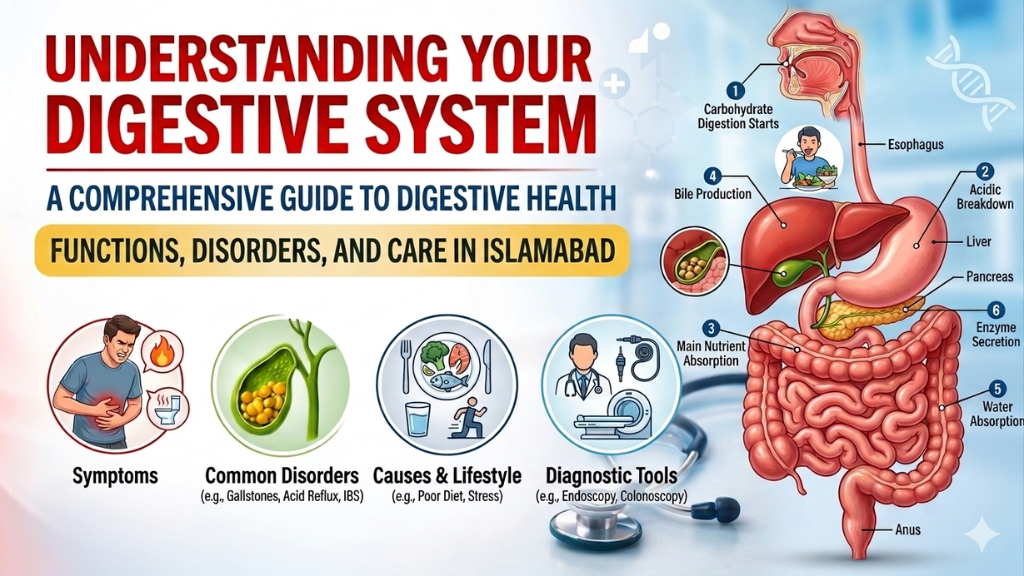
Digestive problems are increasingly common in Pakistan, including acid reflux, stomach ulcers, constipation, irritable bowel syndrome (IBS), hepatitis, fatty liver disease, and colon-related conditions. Understanding how the digestive system works can help you recognize symptoms early and seek timely medical care.
At ProfGill.com, Prof. Muzaffar Latif Gill provides advanced care for digestive and liver diseases with more than 30 years of clinical experience.
The digestive system is a group of organs responsible for processing food, absorbing nutrients, and removing waste from the body. It converts the food you eat into energy and essential nutrients required for growth, repair, and overall health.
The digestive system includes:
Each organ performs a specific function to ensure proper digestion and nutrient absorption.
Digestion begins in the mouth. Chewing breaks food into smaller pieces while saliva contains enzymes that start digesting carbohydrates.
The esophagus is a muscular tube that carries food from the mouth to the stomach through rhythmic movements called peristalsis.
The stomach mixes food with acids and digestive enzymes. This process helps break down proteins and turns food into a semi-liquid form.
Most digestion and nutrient absorption occur in the small intestine. Nutrients such as vitamins, minerals, carbohydrates, proteins, and fats are absorbed into the bloodstream.
These organs support digestion by producing bile and digestive enzymes.
The colon absorbs water and electrolytes while forming stool for elimination.
Digestive diseases can affect people of all ages. Some conditions are temporary, while others require long-term management.
Gastroesophageal reflux disease occurs when stomach acid flows back into the esophagus.
IBS affects bowel habits and causes abdominal discomfort.
Gastritis is inflammation of the stomach lining caused by infection, medications, or stress.
Ulcers are sores that develop in the stomach or upper intestine.
Fat accumulation in the liver can lead to inflammation and liver damage if untreated.
Hepatitis refers to liver inflammation caused by viruses, alcohol use, or autoimmune conditions.
Gallstones form in the gallbladder and may block bile flow.
Colon polyps may develop into cancer if not detected and removed early through colonoscopy screening.
Digestive disorders often present with symptoms that should not be ignored.
If symptoms persist for more than a few days, medical evaluation is recommended.
Several lifestyle, dietary, and medical factors contribute to digestive diseases.
High-fat, processed, and spicy foods may irritate the digestive tract.
Chronic stress can affect digestion and worsen conditions like IBS and acid reflux.
Bacterial and viral infections may cause stomach inflammation and diarrhea.
These habits increase the risk of ulcers, liver disease, and gastrointestinal cancers.
A sedentary lifestyle can contribute to constipation and poor digestion.
Some digestive diseases run in families, including inflammatory bowel disease and colon cancer.
Early diagnosis is essential for preventing complications and improving treatment outcomes. Many digestive diseases can be effectively managed when identified early.
Diagnostic procedures commonly used by gastroenterologists include:
At ProfGill.com, advanced diagnostic and therapeutic procedures are available under the supervision of Prof. Muzaffar Latif Gill.
Many people ignore digestive symptoms until they become severe. Consulting a gastroenterologist early can prevent serious complications.
You should see a gastroenterologist if you experience:
Patients over the age of 45 are also advised to undergo colonoscopy screening for colorectal cancer prevention.
Healthy lifestyle habits can significantly improve digestive health.
Consume fruits, vegetables, fiber-rich foods, and lean proteins.
Drink plenty of water to support digestion and bowel movement.
Physical activity improves gut motility and overall health.
These increase the risk of digestive and liver diseases.
Stress management techniques such as meditation and adequate sleep can improve digestive function.
Routine medical evaluations help detect problems early.
Patients looking for expert digestive and liver disease care can consult Prof. Muzaffar Latif Gill, one of the leading specialists in gastroenterology and hepatology in Pakistan.
With over 30 years of experience, he specializes in:
His clinic in Islamabad provides patient-focused care with advanced diagnostic and treatment facilities.
Prof. Muzaffar Latif Gill is considered one of the leading gastroenterologists and hepatologists in Islamabad, Pakistan, with more than 30 years of experience in digestive and liver disease care. He is internationally trained, US-certified, and specializes in advanced procedures including endoscopy, colonoscopy, ERCP, and liver disease management. Patients from across Pakistan consult him for expert diagnosis and treatment of gastrointestinal and hepatology conditions.
The digestive system breaks down food, absorbs nutrients, and removes waste from the body.
Common digestive disorders include acid reflux, IBS, gastritis, ulcers, fatty liver disease, hepatitis, and colon polyps.
Persistent symptoms such as abdominal pain, blood in stool, unexplained weight loss, or chronic reflux should be evaluated by a gastroenterologist.
Fiber-rich foods, fruits, vegetables, yogurt, and adequate water intake support healthy digestion.
Colonoscopy is generally safe and comfortable because sedation is commonly used during the procedure.
Yes, stress can worsen acid reflux, IBS, bloating, and stomach discomfort.
Prof. Muzaffar Latif Gill is widely recognized for his expertise in gastroenterology, hepatology, and advanced endoscopic procedures in Islamabad.
If you are experiencing digestive symptoms or need expert evaluation for stomach, intestinal, liver, or pancreatic conditions, schedule a consultation with Prof. Muzaffar Latif Gill.
Visit: ProfGill.com

Copyright © 2024 Prof Muzaffar Latif Gill. All rights reserved. Powered By AKITS
