Have you ever wondered what a Gastroenterologist does every day? Many people think a Gastroenterologist only performs endoscopy or treats stomach pain. In reality, their work is much broader. They help diagnose, treat, and prevent diseases affecting the digestive system, including the stomach, intestines, liver, pancreas, gallbladder, and esophagus.
In Pakistan, digestive diseases such as acid reflux (GERD), constipation, stomach ulcers, hepatitis, irritable bowel syndrome (IBS), fatty liver disease, and colon problems are becoming more common. A Digestive Health Specialist plays an important role in helping patients receive the right diagnosis and treatment before these conditions become serious.
Let's take a closer look at a typical day in the life of a Gastroenterologist.
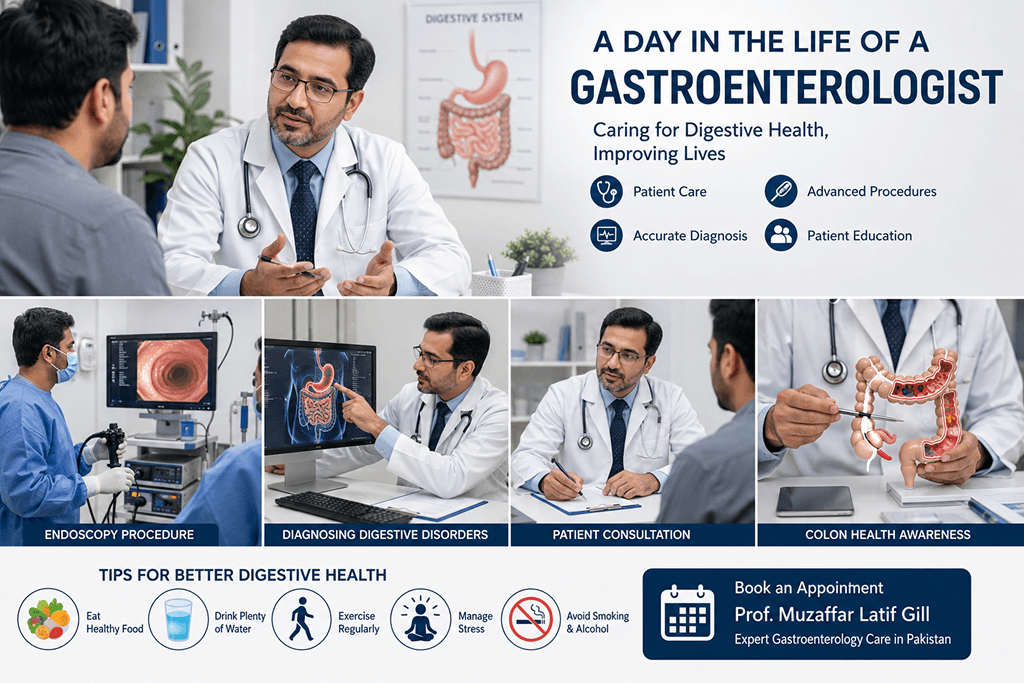
A Gastroenterologist is a medical doctor who specializes in diagnosing and treating diseases of the digestive system. They care for patients with problems involving the:
Whether someone has frequent stomach pain, heartburn, liver disease, or digestive bleeding, a Gastroenterologist in Pakistan can help identify the cause and recommend the best treatment.
Most mornings begin with seeing patients in the clinic. Every patient has different symptoms, so the doctor carefully listens to their concerns.
Common complaints include:
The Gastroenterologist asks about the patient's medical history, diet, medications, and lifestyle before recommending further tests or treatment.
Listening carefully is one of the most important parts of providing quality Expert Gastroenterology Services.
After evaluating symptoms, the doctor may recommend diagnostic tests to understand the exact problem.
Some common investigations include:
These tests help detect conditions such as:
Early diagnosis often leads to simpler and more successful treatment.
Many people feel nervous when they hear they need an endoscopy or colonoscopy. However, these procedures are safe, effective, and often lifesaving.
This procedure allows the doctor to examine the food pipe, stomach, and upper intestine using a thin flexible camera.
It helps diagnose:
A colonoscopy examines the large intestine and rectum.
It helps detect:
These procedures help doctors identify problems before they become serious.
A Gastroenterologist does more than prescribe medicines. They also educate patients about their condition.
Many digestive diseases improve when patients understand:
Patient education is an important part of long-term digestive health.
Today's Digestive Health Specialists use advanced technology to provide accurate diagnoses.
Modern equipment includes:
These technologies help doctors detect diseases earlier and choose the most effective treatment.
Many digestive conditions require ongoing care rather than one-time treatment.
A Gastroenterologist regularly manages patients with:
Regular follow-up appointments allow the doctor to monitor progress and adjust treatment when needed.
Some patients have health problems involving multiple organs.
A Gastroenterologist may work closely with:
This teamwork ensures patients receive complete medical care.
Good digestive health depends on more than medication.
A Digestive Health Specialist often advises patients to:
These habits can reduce the risk of many digestive diseases.
Medicine changes every year, and Gastroenterologists continue learning throughout their careers.
They regularly:
Continuous learning helps doctors provide better care for their patients.
Many digestive diseases develop slowly and may not cause severe symptoms in the beginning.
Ignoring symptoms such as:
can delay diagnosis.
Early medical evaluation can detect serious conditions before complications develop.
You should consult a Gastroenterologist if you experience:
Getting professional advice early can improve treatment outcomes and protect your long-term digestive health.
The work of a Gastroenterologist goes far beyond treating stomach pain. Every day, these specialists diagnose digestive diseases, perform life-saving procedures, educate patients, and help people live healthier lives.
Whether someone is dealing with acid reflux, liver disease, IBS, colon problems, or other digestive conditions, timely care from an experienced Digestive Health Specialist can make a significant difference.
If you or a loved one is experiencing ongoing digestive symptoms, do not ignore them. Early diagnosis and expert treatment can help prevent complications and improve your quality of life.
If you are experiencing persistent digestive symptoms, schedule a consultation with Prof. Muzaffar Latif Gill. With extensive experience in diagnosing and treating digestive disorders, he provides compassionate, patient-focused care using modern diagnostic techniques and personalized treatment plans to help you achieve better digestive health.
A Gastroenterologist treats diseases of the stomach, intestines, liver, pancreas, gallbladder, and esophagus.
Visit a specialist if you have persistent stomach pain, acid reflux, constipation, diarrhea, blood in the stool, or unexplained weight loss.
No. Most endoscopy procedures are quick, safe, and performed with sedation to keep patients comfortable.
A general physician treats many medical conditions, while a Gastroenterologist specializes in diseases of the digestive system.
Many digestive problems can be prevented by eating a healthy diet, exercising regularly, avoiding smoking, limiting alcohol, and seeking medical advice when symptoms first appear.

Copyright © 2024 Prof Muzaffar Latif Gill. All rights reserved. Powered By AKITS
